Best Enterprise SSD Brands for Business Servers
Servers are important for modern businesses because they store important data, run databases and applications, and help with virtualization and cloud services. Traditional hard drives are being replaced more and more by business SSDs, which offer faster performance, lower latency, and better reliability as server workloads continue to grow.
But not every SSD is made to work in a server setting. Consumer SSDs might work for PCs, but business servers need storage options that can work 24 hours a day, 7 days a week, handle a lot of work, last a long time, and keep data safe.
Leading enterprise SSD makers pay attention to things like protecting against power loss, having high endurance ratings, performing consistently, and working with professional server platforms.
We will compare the best corporate SSD brands for business servers and talk about which brands are best for different types of work.
What Makes an SSD “Enterprise Grade”?
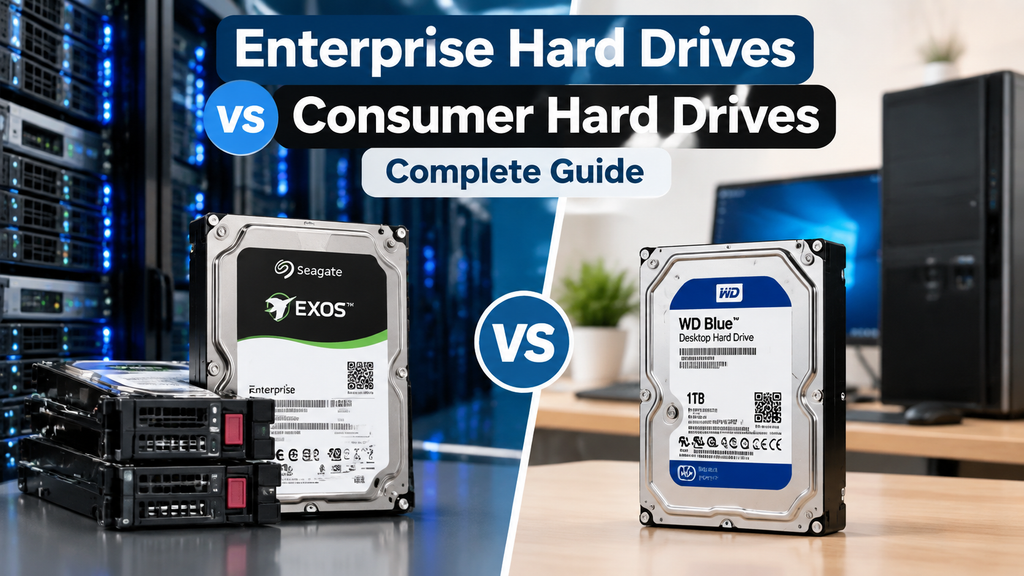
Enterprise SSDs are designed differently from consumer SSDs. They are built for environments where storage performance and uptime directly affect business operations.
Important enterprise SSD features include:
1. High Endurance
Server workloads generate continuous read and write operations.
Enterprise SSDs include higher endurance ratings measured in:
- DWPD (Drive Writes Per Day)
- TBW (Terabytes Written)
A higher endurance rating means the SSD can handle more data writes throughout its lifespan.
2. Power Loss Protection (PLP)
Unexpected power failure can damage data that is still being written.
Enterprise SSDs often include power-loss protection technology that helps safely complete pending operations during a power interruption.
3. Consistent Performance
Consumer SSDs may slow down during long workloads because of cache limitations.
Enterprise SSDs are designed to maintain stable performance during:
- Database operations
- Virtual machines
- Cloud applications
- Large file processing
4. Server Compatibility
Enterprise SSDs are available in server-friendly interfaces:
- SATA SSD
- SAS SSD
- NVMe U.2/U.3 SSD
- EDSFF form factors
They are commonly used in Dell PowerEdge, HPE ProLiant, Lenovo ThinkSystem, and other enterprise servers.
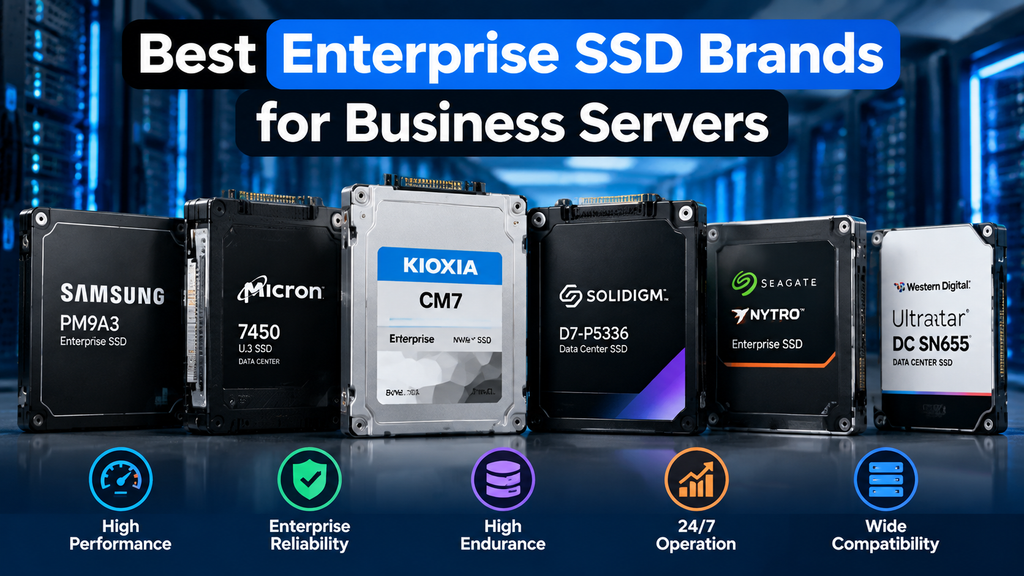
Top Enterprise SSD Brands for Business Servers
1. Samsung Enterprise SSD
Samsung is one of the most recognized names in enterprise storage. The company produces high-performance SSD solutions for data centers and business servers.
Popular Samsung enterprise SSD series:
- Samsung PM9A3
- Samsung PM1743
- Samsung PM893
Samsung enterprise SSDs are commonly used for:
- Virtualization
- Cloud infrastructure
- Databases
- High-performance applications
Samsung has remained among the leading enterprise SSD suppliers globally, with strong demand for its data center SSD products.
Best For:
Businesses looking for high performance and advanced NVMe storage.
2. Micron Enterprise SSD
Micron is a major enterprise storage manufacturer known for reliability and endurance-focused SSD solutions.
Popular Micron enterprise SSD series:
- Micron 7450
- Micron 9400
- Micron 9550
- Micron 6500 ION
Micron SSDs are widely used in:
- Enterprise servers
- AI workloads
- Data analytics
- Cloud environments
Micron focuses heavily on enterprise storage technologies, including high-capacity and high-performance SSD solutions.
Best For:
Businesses needing a balance between performance, endurance, and capacity.
3. Kioxia Enterprise SSD
Kioxia (formerly Toshiba Memory) is a leading flash storage manufacturer supplying SSD solutions for enterprise environments.
Popular Kioxia enterprise SSD series:
- Kioxia CM Series
- Kioxia CD Series
- Kioxia PM Series
Kioxia SSDs are used in:
- Data centers
- Enterprise servers
- Storage appliances
The company focuses on high-capacity enterprise SSDs and server-grade flash solutions.
Best For:
Large-scale storage environments requiring reliable enterprise flash.
4. Solidigm Enterprise SSD
Solidigm was created after SK hynix acquired Intel’s NAND and SSD business.
Popular Solidigm enterprise SSD series:
- D5-P5336
- D7 Series
Solidigm is especially known for high-capacity QLC enterprise SSDs designed for:
- Data storage
- Cloud environments
- Read-intensive workloads
Best For:
Businesses needing large storage capacity at a lower cost per TB.
5. Intel Enterprise SSD (Legacy / OEM Stock)
Intel was historically one of the strongest enterprise SSD brands.
Although Intel’s SSD business moved to Solidigm, many Intel enterprise SSD models remain available in the secondary market.
Popular models include:
- Intel D3 Series
- Intel D7 Series
- Intel Optane SSDs
Intel enterprise drives are known for:
- Reliability
- Low latency
- Enterprise firmware
Best For:
Server replacements and organizations maintaining existing Intel-based storage systems.
6. Seagate Enterprise SSD
Seagate is well known for enterprise storage products, including SSD and HDD solutions.
Popular Seagate SSD series:
- Seagate Nytro SSD
- Seagate FireCuda enterprise solutions
Seagate enterprise SSDs are designed for:
- Data centers
- Servers
- High-performance computing
Best For:
Organizations already using Seagate enterprise storage ecosystems.
7. Western Digital / WD Ultrastar Enterprise SSD
Western Digital provides enterprise storage through its Ultrastar product line.
Popular models include:
- WD Ultrastar DC SN series
- Enterprise NVMe SSD solutions
WD enterprise SSDs are designed for:
- Cloud infrastructure
- Data centers
- Business servers
Best For:
Businesses needing reliable enterprise storage from a major storage provider.
Enterprise SSD Brand Comparison
| Brand | Main Strength | Best Use Case |
|---|---|---|
| Samsung | High performance | Databases, virtualization, AI |
| Micron | Reliability & endurance | Enterprise applications |
| Kioxia | Capacity solutions | Data centers |
| Solidigm | High-capacity storage | Read-heavy workloads |
| Intel | Low latency legacy solutions | Existing server environments |
| Seagate | Enterprise storage ecosystem | Business servers |
| Western Digital | Data center reliability | Cloud and storage systems |
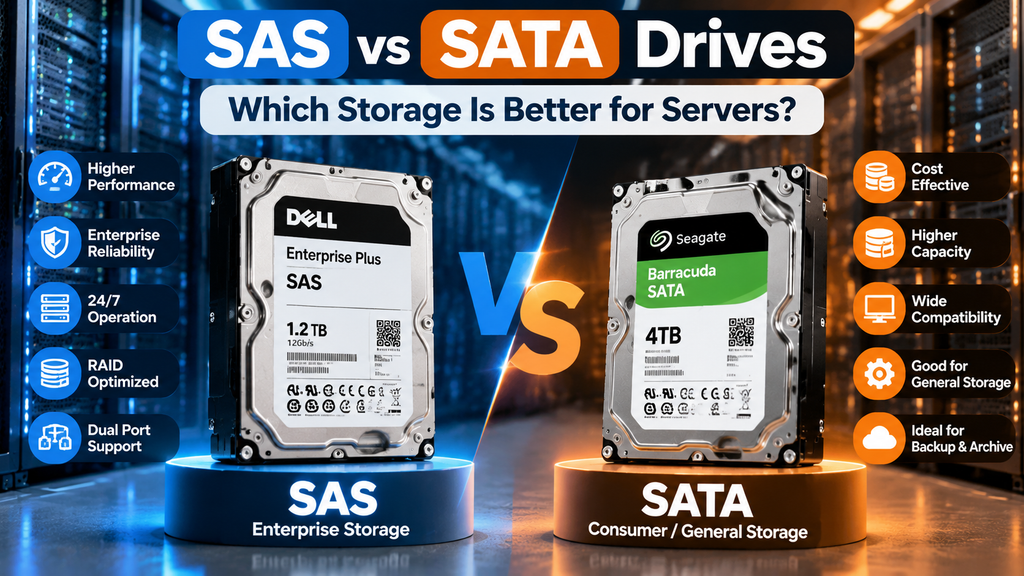
SATA vs SAS vs NVMe Enterprise SSDs
Choosing the brand is only part of the decision. The interface also matters.
SATA Enterprise SSD
Advantages:
- Lower cost
- Wide compatibility
- Good for general server workloads
Suitable for:
- File servers
- Backup systems
- Basic applications
SAS Enterprise SSD
Advantages:
- Enterprise reliability
- Better multi-drive support
- Dual-port capability
Suitable for:
- Traditional enterprise servers
- RAID storage systems
NVMe Enterprise SSD
Advantages:
- Highest performance
- Extremely low latency
- Ideal for modern applications
Suitable for:
- Databases
- AI workloads
- Virtualization
- High-performance computing
How to Choose the Right Enterprise SSD?
Before purchasing an SSD for your server, consider:
Workload Type
Different applications require different SSD characteristics.
Examples:
- Database servers → High endurance SSD
- Virtual machines → High performance NVMe SSD
- Backup servers → High-capacity SSD
- Web servers → Read-intensive SSD
Server Compatibility
Always verify:
- Server model
- RAID controller support
- Interface type
- Firmware compatibility
- Drive size
Capacity Requirements
Consider future growth instead of only current storage needs.
A slightly larger enterprise SSD may reduce future upgrade costs.
Where Can You Buy Enterprise SSDs in Canada?
Businesses looking for reliable server storage need compatible enterprise hardware from a trusted supplier.
Beaver Computers provides enterprise storage solutions in Canada, including:
- Enterprise SSDs
- Server SSD replacements
- SAS and NVMe storage
- Dell, HPE, Lenovo compatible drives
Choosing the correct enterprise SSD helps businesses improve performance, reduce downtime, and maintain reliable server operations.
Final Thoughts
The choice of enterprise SSDs is contingent upon your workload, server architecture, and performance specifications.
To achieve optimal performance, manufacturers such as Samsung and Micron are extensively utilized in rigorous enterprise settings.
Solidigm and Kioxia offer robust alternatives for high-capacity storage.
Dell, HPE, and Lenovo OEM-certified SSDs can facilitate enhanced compatibility for current server ecosystems.
The optimal enterprise SSD is not necessarily the quickest; rather, it is the drive that aligns with your business demands, dependability standards, and server architecture.